

Wrong HS Code: Risks, Penalties, and How to Fix It
Updated June 2026 · by the Nexim Team · ~8 min read
If you've landed on this article, there's probably one nagging question: “what if the HS code I've been using is wrong?” That's a fair question to ask — and asking it now is far cheaper than finding the answer at an audit. This guide explains the real risks of a wrong HS code, how penalties are calculated, and the concrete steps to fix it before an auditor finds it first.
Quick answer
A wrong HS code takes two forms: underpayment (risking tiered penalties and back-billing up to two years) and overpayment (money quietly lost). To fix it, run a classification self-audit, and if you find an error, file a voluntary disclosure — that positions it as a correction rather than an official assessment with full penalties.
Not sure what an HS code is or how to find one? Start with the HS code basics guide first, then come back here.
Two Faces of the Same Mistake
Many people assume “wrong code” means one thing. In fact there are two forms, and both cost you — they just hurt in different ways.
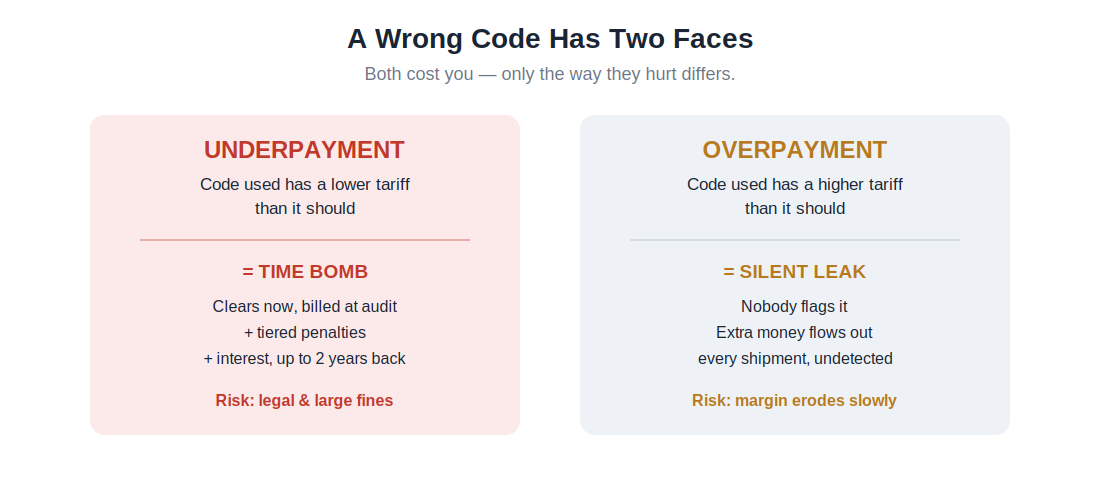
Figure 1. Two forms of a wrong code: underpayment risks penalties; overpayment silently erodes margin.
Form 1: Underpayment — the Time Bomb
This is the one people fear. The code in use carries a lower tariff than it should, so the import duty you pay falls short. The trouble is that the goods still clear — no alarm sounds. The shortfall quietly accumulates on every shipment, until one day a customs audit finds it. At that point, the bill isn't just the principal shortfall, but administrative penalties and interest on shipments going back up to two years.
Form 2: Overpayment — the Silent Leak
This one is rarely discussed because nobody flags it — customs won't call to say “you've overpaid.” The code in use carries a higher tariff than it should, so every shipment you pay more than you owe. There's no legal risk, but your margin erodes slowly, month after month, never showing up as a “problem” on the books.
Insider
In practice, overpayment is often missed precisely because it feels “safe” — no fine, after all. But money flowing out with no obligation behind it is still a leak. When you review (see the self-audit section below), check both directions: don't only hunt for underpayment, look for overpayment too.
How Are Penalties Calculated?
This is the part that turns a small number into a large one. When underpayment is caught through an assessment, the calculation isn't simply “pay the shortfall.” It's several layers:
- The principal shortfall — the unpaid import duty and import taxes.
- Tiered administrative penalties — the percentage rises with the ratio of your shortfall to what was already paid. The larger your shortfall proportionally, the higher the penalty rate — generally tiered from around 100% up to several times the shortfall.
- Applied per assessment, across shipments going back up to two years — so a small recurring error compounds like interest.
| Component | Illustration | Note |
|---|---|---|
| Principal shortfall / shipment | $1,600 | Gap between correct and used tariff |
| Shipments affected | 36 (2/mo × 18 mo) | Audit traces backward |
| Accumulated principal | ~$58,000 | Before penalties |
| + Administrative penalty | Tiered (min. ~100%) | So the total can multiply |
| Estimated total bill | ~$116,000+ | From a mistake that felt small |
The figures above are a conservative illustration to show the mechanism — not exact rates. The key takeaway: what makes a wrong code expensive isn't one shipment, but the accumulation and the multiplying penalties.
Self-Found vs Auditor-Found: the Difference That Decides Everything
This is the single most important concept in the whole article. From the exact same mistake, there are two very different roads — and what decides which one you take isn't whether you were right or wrong, but who finds it first.
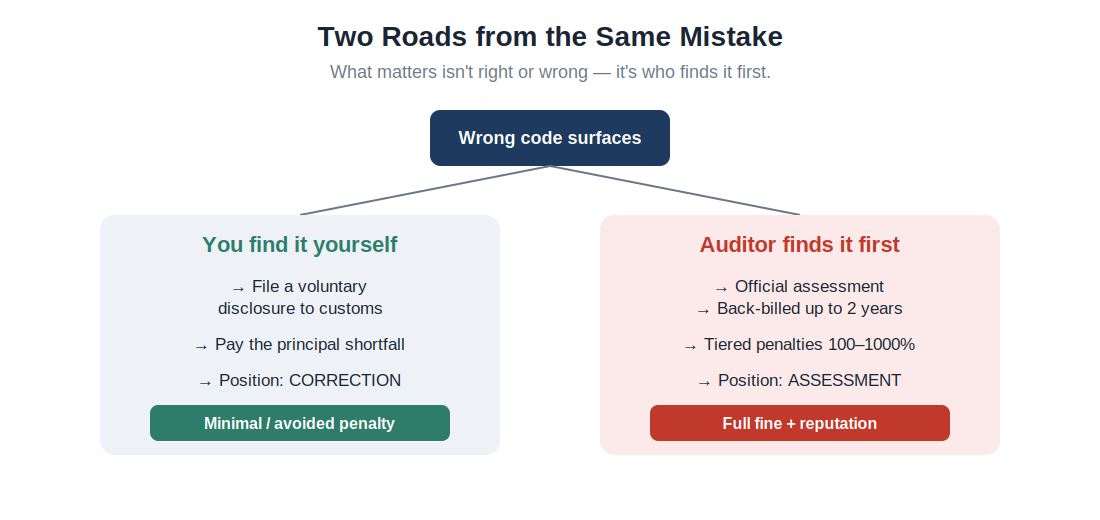
Figure 2. The same mistake branches into a correction (if you find it) or an assessment plus penalties (if the auditor does).
If you find the error yourself, you can file a voluntary disclosure with customs — paying the principal shortfall with the position of a correction, and far lighter or even avoided penalties. If the auditor finds it first, it becomes an official assessment: back-billing, full tiered penalties, and a blemished compliance record. The difference between the two can run into tens of thousands of dollars — from an identical mistake.
How to Fix It: the 10-Minute Classification Self-Audit
The good news is that the check an auditor performs is one you can run yourself — and it needs no special expertise. What an auditor looks at first isn't document tidiness, but consistency: is the same product coded the same way across all shipments?
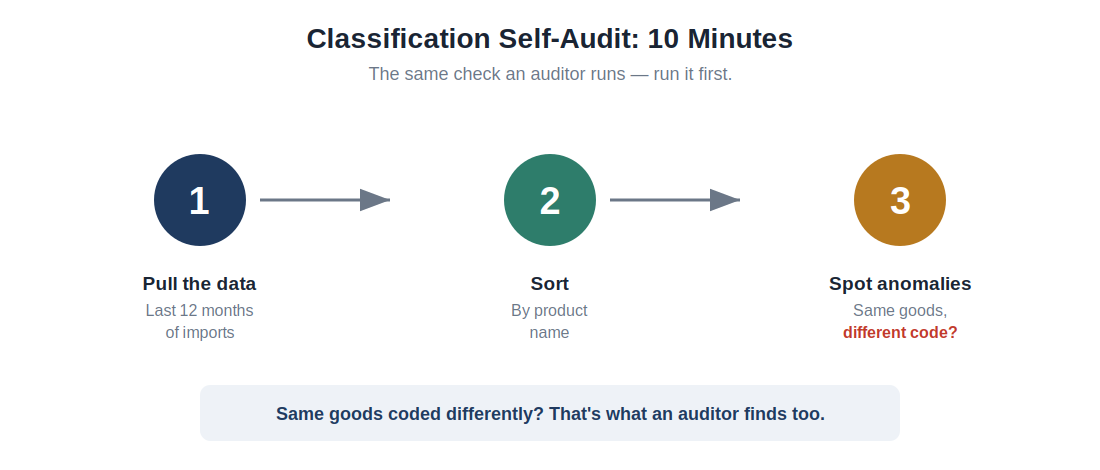
Figure 3. The three steps of a self-audit that mirrors an auditor's first check.
- Pull your last 12 months of import data from your declaration records or internal system — HS code, product name, and value per shipment.
- Sort by product name or description so similar goods cluster together.
- Spot the anomaly: same goods, different code. If one product has been coded under several different codes, that's the first signal an auditor looks for — and the one you should fix first.
If you find an inconsistency, don't panic. First determine which code is correct by returning to the basics — material, function, form — then assess the scale of the impact and consider a voluntary disclosure. For large volumes or complex cases, involve a customs professional.
Insider: two questions for your customs broker
Because codes are often chosen by the broker, the root of a recurring error frequently sits there. Ask these two things, and log the answers in your internal records:
1. “What's the basis for this product's code?”
2. “When was it last reviewed against the current tariff schedule?”
A broker tends to pick the code that's safe for them to clear today. Legal responsibility for the declaration still rests with you — so classification deserves to be treated as a reviewed internal decision, not a task simply outsourced.
Prevention Is Cheaper Than Repair
Fixing a mistake always costs more than preventing it. Three habits that close most of the gaps:
- Schedule a classification self-audit twice a year — don't wait for a notice.
- Treat codes as reviewed assets, not inheritances accepted unquestioned from old shipments.
- Re-verify whenever the tariff schedule is updated — some codes change at revision.
For companies with dozens of shipments a month, manual checking quickly becomes impractical. AI-assisted classification can check consistency automatically, attach a confidence score to each code, and flag the doubtful ones for human review — so errors are caught before they become a bill.
Check your classification, free
You can test whether your product's code is correct on Nexim — free for your first classification. Enter the product description, and the system traces the classification logic along with its confidence level. Visit nexim-ai.com.
Frequently Asked Questions
If I find a wrong code, is it better to stay quiet or report it?
In principle, finding and voluntarily disclosing it yourself puts you in a far lighter correction position than being found by an auditor. To determine the specific steps and the scale of impact, consult a customs professional.
How far back can customs bill me?
Customs authorities generally have the power to reassess up to two years back. That's why a recurring error can accumulate significantly.
Can overpayment be reclaimed?
There are refund mechanisms for certain conditions, but the process isn't always simple and there are time limits. Preventing overpayment from the start is far more efficient.
Who is liable if the broker chose the wrong code?
Legal responsibility for the customs declaration rests with the importer/exporter. That's why it's important to treat classification as a decision you review, rather than one fully delegated to a third party.
Next Steps
A wrong HS code isn't the end of the world — as long as you find it before the auditor does. Self-audit twice a year, treat codes as reviewed decisions, and fix inconsistencies voluntarily. To go deeper:
- Return to the HS code basics guide to confirm how to find the right code.
- Learn how to claim FTA preferential tariffs — often the right code also unlocks a tariff discount.
- Understand what gets checked in a customs audit in full.
Want to confirm your product's code is correct right now? Test it directly at nexim-ai.com.
This article is informational and not legal or official customs advice. Penalty figures and illustrations are general; for specific cases, consult the applicable regulations or a customs professional. © 2026 Nexim.