

HS Codes Explained: Meaning, How to Find Them, and Examples
One of the most important numbers in your import-export business isn't your selling price or margin — it's the code attached to every product you ship or receive. It's called an HS code. Get it wrong and you face inflated import duties, goods held at port, or a penalty bill that surfaces years later. This guide explains what an HS code is, how to find the right one, five real examples, and the mistakes that most often cost traders money — with a particular focus on what exporters and importers dealing with Indonesia need to know.
Quick answer
An HS code (Harmonized System code) is an international 6-digit product number used by 200+ countries to classify goods. Individual countries add further digits for national detail — Indonesia extends it to 8 digits in its tariff schedule (BTKI). The code determines a product's import duty, taxes, and required permits. To find it, don't type the trade name — describe the product's material, function, and form.
What Is an HS Code?
Imagine trying to fly abroad without a passport. At immigration you'd be turned away — no one can verify who you are. Goods crossing borders face the same logic. An HS code is a product's “identity card”: without the correct code, your goods can't be clearly processed by any customs authority.
HS stands for Harmonized System, a naming and numbering framework developed by the World Customs Organization and used by more than 200 countries. Because it's internationally standardized, a product shares the same first 6 digits whether it's in Indonesia, Japan, or Germany. Only the national-level detail in the final digits differs.
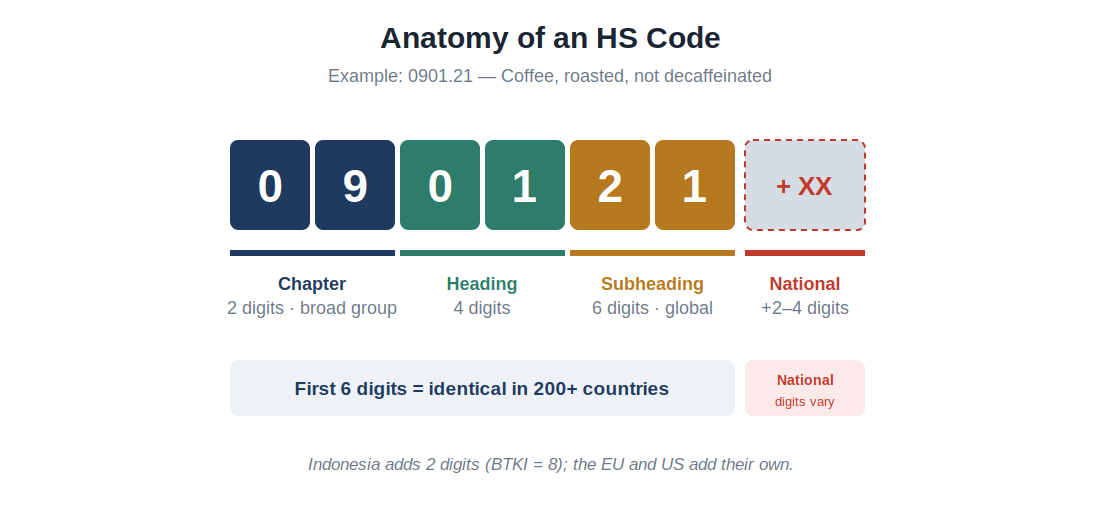
Figure 1. Anatomy of an HS code: the first 6 digits are global; countries add their own national digits.
From this code, a country reads three things at once: what the product is, what tariff applies, and what permits are required. That's why an HS code isn't mere paperwork — it's the foundation of your entire cost and compliance calculation.
Why It Matters — for Both Importers and Exporters
The code's role differs by trade direction, but both touch money directly:
- For importers: the code sets the import duty you pay. A wrong code means either underpayment (penalty risk) or overpayment (money quietly lost).
- For exporters: the code sets the duty your buyer pays in their country — affecting your price competitiveness. The right code also determines whether your buyer can claim a preferential tariff under a trade agreement.
Reading the Digits: From Chapter to National Tariff Line
An HS code is hierarchical — the further right you go, the more specific it gets. Using roasted coffee (0901.21) as an example:
| Segment | Meaning |
|---|---|
| 09 (Chapter) | The broad group. Chapter 09 = “Coffee, tea, maté and spices.” |
| 0901 (Heading) | The 4-digit heading — narrows to “coffee” in general. |
| 0901.21 (Subheading) | 6 digits — “roasted coffee, not decaffeinated.” This part is identical worldwide. |
| + national digits | Each country appends its own (Indonesia: 8 digits in BTKI; the EU: 8–10; the US: up to 10). |
Because each country extends the code differently, when you prepare export documents you must use the destination country's format to claim the correct tariff. A code that's right in Indonesia may need its national suffix adjusted for the EU or US.
How to Find the Right HS Code
This is where most people stumble. They open a lookup portal, type “hiking boots” or “coffee machine,” and get confused when nothing fits. The reason is simple: classification systems don't recognize trade names. They recognize only three things.
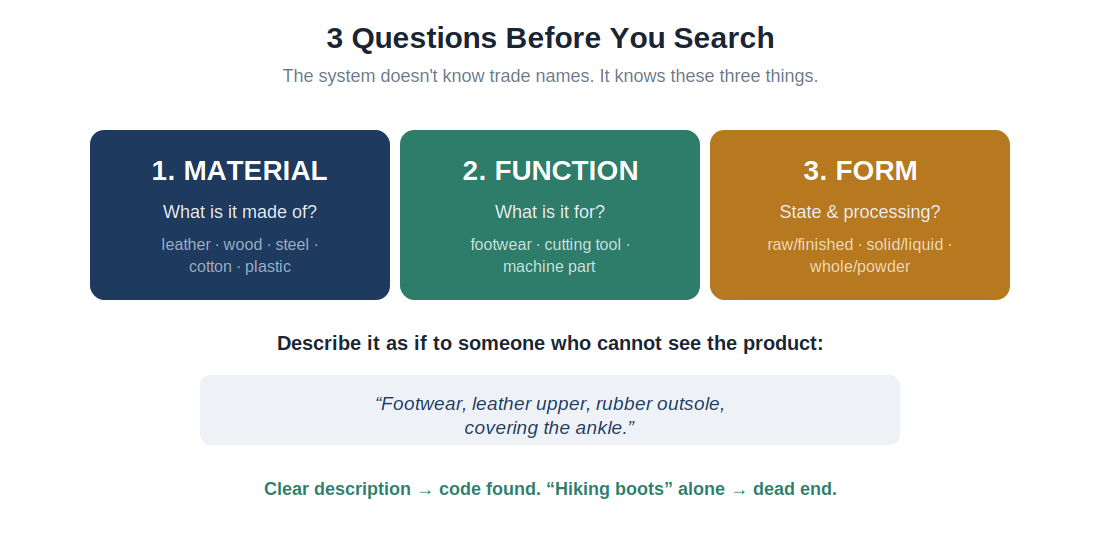
Figure 2. The three questions to answer before you search for a code.
Step 1 — Write a Technical Description, Not a Marketing Name
Before touching any portal, describe your product as if explaining it to someone who can't see it. Answer all three questions: what material it's made of, what function it serves, and in what form or level of processing.
Example: transforming a description
❌ “hiking boots”
✅ “footwear, leather upper, rubber outer sole, covering the ankle”
The second description points straight to the right chapter and heading, because it carries material (leather), function (footwear), and form (covers the ankle).
Step 2 — Use a Supplier's or Competitor's Code as a Hint, Not an Answer
An insider tip rarely shared: the HS code your overseas supplier uses, or the one on a competitor's documents, is a very useful starting point. But don't take it at face value. Their code may be wrong, or your product's specification may differ slightly in a way that changes the classification. Use it as a direction, then verify yourself.
Step 3 — Search the Tariff Schedule Hierarchically
With your technical description ready, work through the tariff schedule top-down: first settle on the most plausible chapter, then narrow to the 4-digit heading, then the subheading, down to the national tariff line. This big-group-to-small approach is far more accurate than guessing the full code at once. For Indonesia, the reference is the BTKI; most countries publish their schedule online, and the WCO maintains the global 6-digit nomenclature.
Note: classification has rules
Choosing a code isn't guesswork. Six official rules called the General Rules for the Interpretation of the Harmonized System (GIR) determine the code based on a product's material, function, and processing level. For most everyday cases the three questions above suffice — but for mixtures or sets, the GIR is the tie-breaker.
Five Real Classification Examples
The best way to understand HS codes is through examples. Notice how a small change in form or material can move a product into an entirely different code — sometimes a different chapter.
Example 1: Coffee — Processing Form Changes Everything
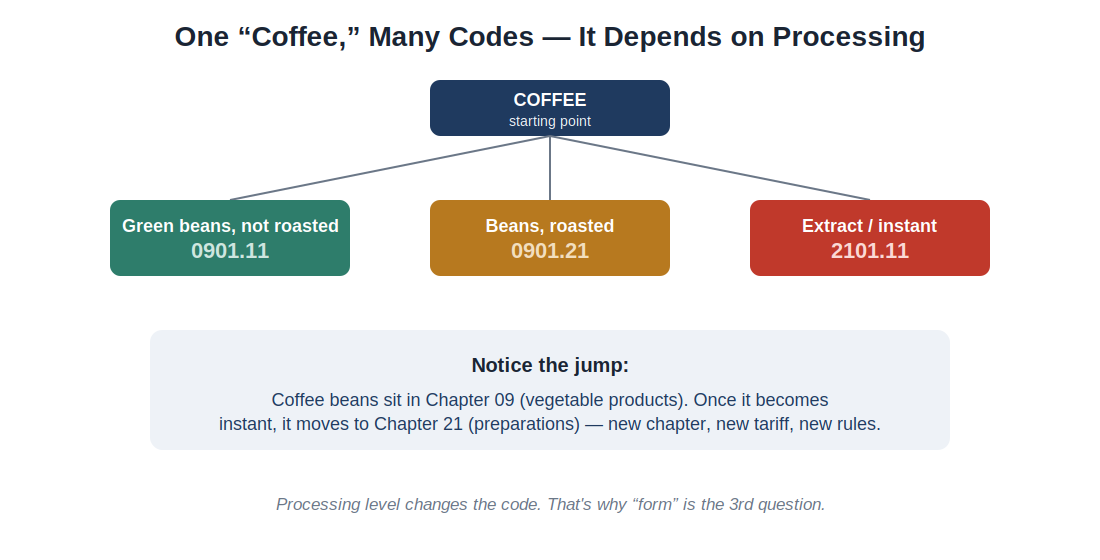
Figure 3. A single commodity, “coffee,” branches into several codes depending on processing level.
Green coffee beans, roasted beans, and instant coffee are three products with three different codes. The most dramatic shift: once coffee becomes an extract or instant, it moves from Chapter 09 (vegetable products) to Chapter 21 (miscellaneous edible preparations) — a different chapter, with different tariffs and rules.
Examples 2–5: Subtle Shifts That Change the Code
| Product | Variant A | Variant B |
|---|---|---|
| Sodium hydroxide (caustic soda) | Solid / flake → 2815.11 | In aqueous solution → 2815.12 |
| Shirt | Knitted → Chapter 61 | Woven → Chapter 62 |
| Tomatoes | Fresh → 0702 | Sauce / prepared → 2103 |
| Tyres | For passenger cars → 4011.10 | For buses/lorries → 4011.20 |
The lesson is consistent: details that seem trivial to a layperson — solid vs liquid, knitted vs woven, fresh vs prepared — are exactly what determine the code in the eyes of customs.
What Happens If You Get the Code Wrong?
The risk of misclassification is often underestimated because the impact isn't immediate. Goods still clear; documents still complete. The problem surfaces later — usually at a customs audit.
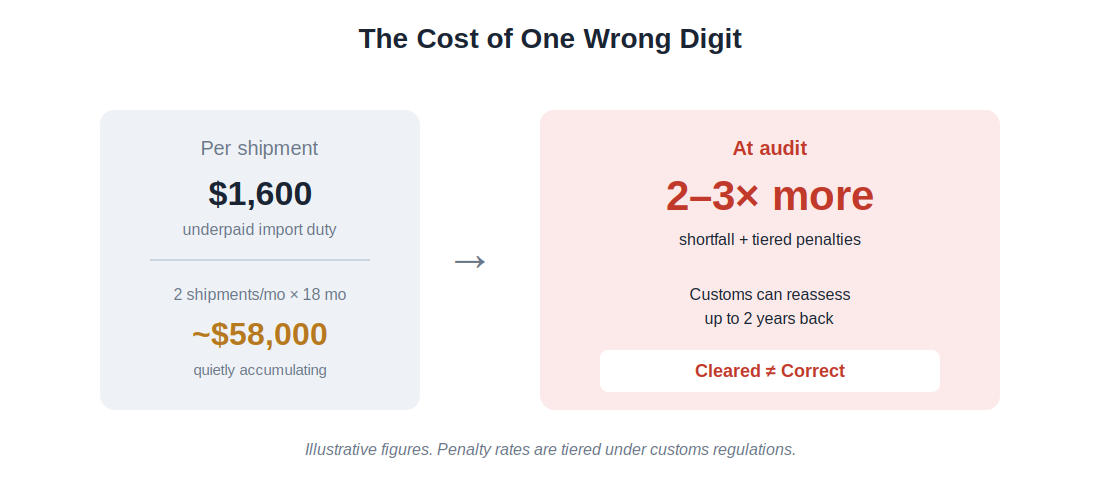
Figure 4. How a small per-shipment underpayment accumulates into a large bill at audit.
Here's the scenario. A company imports components under a code whose tariff is lower than it should be — say the gap creates a $1,600 underpayment per shipment. It feels small. But with two shipments a month over 18 months, it accumulates to roughly $58,000. When an audit finds it, the bill isn't just the shortfall — it's the shortfall plus tiered administrative penalties, so the total can multiply. Customs authorities are typically empowered to reassess duties up to two years back.
Insider: two questions for your customs broker
Your HS code is usually chosen by your customs broker. But there's a misalignment rarely noticed: a broker tends to pick the code that's safe for them to clear today — not necessarily the one that's right for you when you're audited two years from now. These two questions realign it:
1. “What's the basis for this code?”
2. “When was this code last reviewed against current rules?”
A vague answer is an answer in itself.
The 3 Most Common Classification Mistakes
- Typing the trade name.“Hiking boots” or “coffee machine” won't be recognized. Always start from material-function-form.
- Inheriting a code without re-checking. A code “inherited” from a former broker or a years-old shipment may no longer match the current tariff schedule, which is updated periodically.
- Ignoring small spec differences. A different physical form (solid vs liquid), material (knitted vs woven), or processing level can change the code entirely.
Speeding Up Classification with AI
Searching a tariff schedule manually is accurate but time-consuming — especially if you handle many products. This is where AI-assisted classification helps. Instead of a single answer, a good system traces the GIR logic step by step (chapter → heading → subheading → national line) and provides a confidence score along with its reasoning.
The principle we hold at Nexim: an AI that's honest about its uncertainty is far safer than one that's confidently wrong. Codes with low confidence are automatically flagged for human review — because in customs, a wrong guess is expensive.
Try it free
You can test-classify your product on Nexim — free for your first classification, in under five minutes. Try entering a short description, then a full one (material-function-form), and watch how the confidence score changes. Visit nexim-ai.com.
Frequently Asked Questions
What's the difference between an HS code and an HTS or BTKI code?
They share the same first 6 digits (the global HS). “HTS” is the US national extension; “BTKI” is Indonesia's. Each country appends its own digits and tariff detail beyond the international six.
Can one product have more than one HS code?
In principle, a product with a given specification has only one correct code. Confusion usually arises because different specifications (material, form, function) are actually different products for classification purposes.
Who is liable if the code is wrong?
Legal responsibility for the customs declaration rests with the importer/exporter, even if a broker fills it in. That's why classification should be treated as a reviewed internal decision, not a task simply outsourced.
How often do tariff schedules change?
They're updated periodically, following revisions to the international HS and national policy. When an update lands, old codes should be re-checked because some change.
Next Steps
Understanding HS codes is the foundation of nearly every import-export decision — from calculating import duty to claiming preferential tariffs and preparing consistent documents. Once you've mastered the basics, the natural next steps:
- Learn about the risks and penalties of a wrong HS code in more detail, and how to fix one.
- Understand how to claim FTA preferential tariffs so your import duty can drop to 0%.
- Start with the beginner's guide to exporting from Indonesia if you're just getting started.
Have a specific product to classify? Write its description using the material-function-form framework and test it directly at nexim-ai.com.
This article is informational and not legal or official customs advice. Penalty figures and illustrations are general; for specific cases, consult the applicable regulations or a customs professional. © 2026 Nexim.